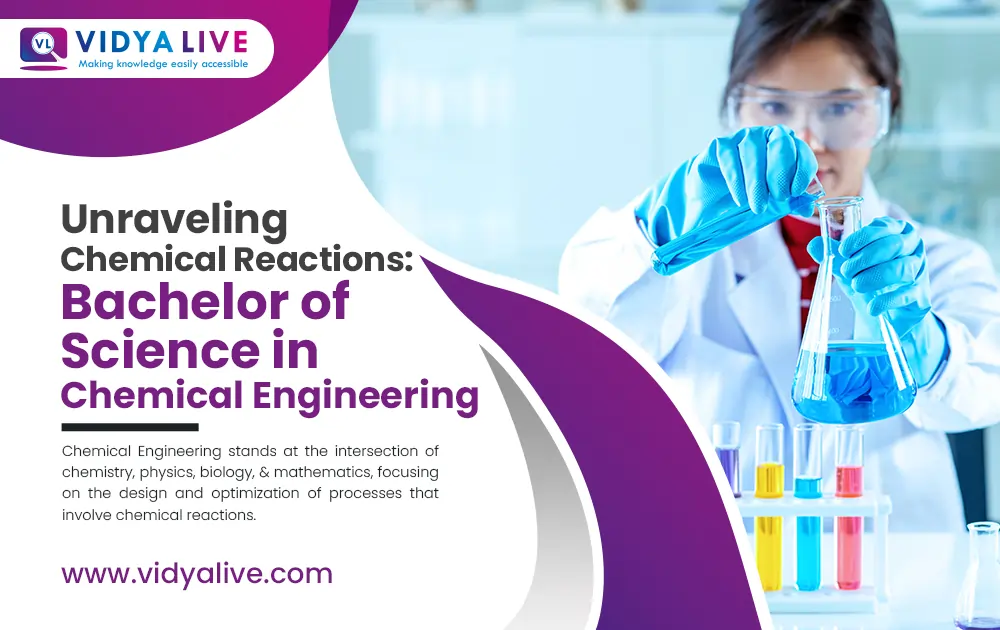
Chemical Engineering stands at the intersection of chemistry, physics, biology, and mathematics, focusing on the design and optimization of processes that involve chemical reactions. A Bachelor of Science in Chemical Engineering Online unravels the complexities of these reactions and prepares students to innovate and solve challenges in industries ranging from pharmaceuticals to environmental sustainability.
Today, many students and professionals are choosing chemical engineering courses online because of their flexibility, accessibility, and career-oriented learning approach. These programs are especially beneficial for Chemical Engineering for working professionals who want to upgrade their skills while managing jobs or other responsibilities.
Exploring the Bachelor of Science in Chemical Engineering Online
A Bachelor of Science in Chemical Engineering Online delves into the fundamental principles of chemistry and engineering to develop efficient processes for converting raw materials into valuable products. It combines theoretical knowledge with hands-on laboratory work and practical applications, emphasizing the importance of safety, sustainability, and economic feasibility in chemical processes.
Students searching for the best online chemical engineering degree can benefit from programs that offer industry-focused curricula, virtual labs, and internship opportunities.
Read More: Online B.Sc Specialization
Chemical Engineering Courses Online: Course Duration and Curriculum Highlights
The duration of a Bachelor of Science in Chemical Engineering Online typically spans four years of full-time study. The curriculum is designed to provide a strong foundation in core engineering principles and specialized knowledge in chemical processes.
For students looking for chemical engineering courses after 12th, this program provides an excellent pathway into the engineering and manufacturing sectors.
Key Subjects Covered in Chemical Engineering Courses Online
- Chemical Thermodynamics: Understanding the energy changes in chemical reactions and phase equilibria.
- Transport Phenomena: Studying the movement of fluids, heat, and mass in chemical processes.
- Chemical Reaction Engineering: Designing and optimizing reactors for chemical reactions.
- Process Control: Implementing strategies to maintain and optimize process performance.
- Separation Processes: Techniques for separating and purifying components in chemical mixtures.
- Environmental Engineering: Addressing the environmental impact and sustainability of chemical processes.
Students often participate in laboratory experiments, projects, and industrial internships to gain practical experience in applying theoretical concepts to real-world challenges. This hands-on approach prepares graduates for careers in diverse industries where chemical engineering principles are applied.
Best Online Chemical Engineering Degree: Career Prospects and Beyond
Graduates of a Bachelor of Science in Chemical Engineering Online are highly sought after in industries such as manufacturing, energy production, pharmaceuticals, biotechnology, environmental engineering, and materials science.
Career Opportunities After Chemical Engineering Courses Online
- Process Engineer
- Product Development Engineer
- Environmental Engineer
- Quality Control Engineer
- Research Scientist
- Project Manager
These roles involve designing processes, conducting research, ensuring product quality, optimizing operations, and implementing sustainable practices.
The best online chemical engineering degree programs also help students develop technical, analytical, and managerial skills that are highly valued in global industries.
Chemical Engineering for Working Professionals
Modern universities now offer Chemical Engineering for working professionals through flexible online learning modules, weekend classes, recorded lectures, and industry-oriented projects.
Benefits include:
- Flexible study schedules
- Access to digital learning resources
- Career advancement opportunities
- Skill enhancement without leaving a job
- Industry-relevant curriculum
These online programs make it easier for professionals to continue their education while balancing work and personal commitments.
Most demanding bsc courses in india after 12th
Chemical Engineering Courses After 12th: Why Choose This Field?
Choosing chemical engineering courses after 12th can open doors to exciting career opportunities in science, technology, manufacturing, healthcare, and sustainability sectors.
Benefits of Studying Chemical Engineering Online
- Strong career demand across industries
- Opportunities in research and innovation
- High salary potential
- Global career opportunities
- Contribution to sustainable development
- Advanced technical skill development
By integrating scientific principles with engineering expertise, graduates play a pivotal role in advancing technology, sustainability, and global health.
Driving Innovation through Bachelor of Science in Chemical Engineering Online
Studying Bachelor of Science in Chemical Engineering Online is not just about understanding chemical reactions; it’s about harnessing this knowledge to innovate and improve the way we produce goods, generate energy, and protect the environment.
Graduates contribute to groundbreaking innovations and address global challenges through sustainable and efficient chemical processes. Whether in pharmaceuticals, renewable energy, food processing, or environmental management, chemical engineers continue to shape the future of modern industries.