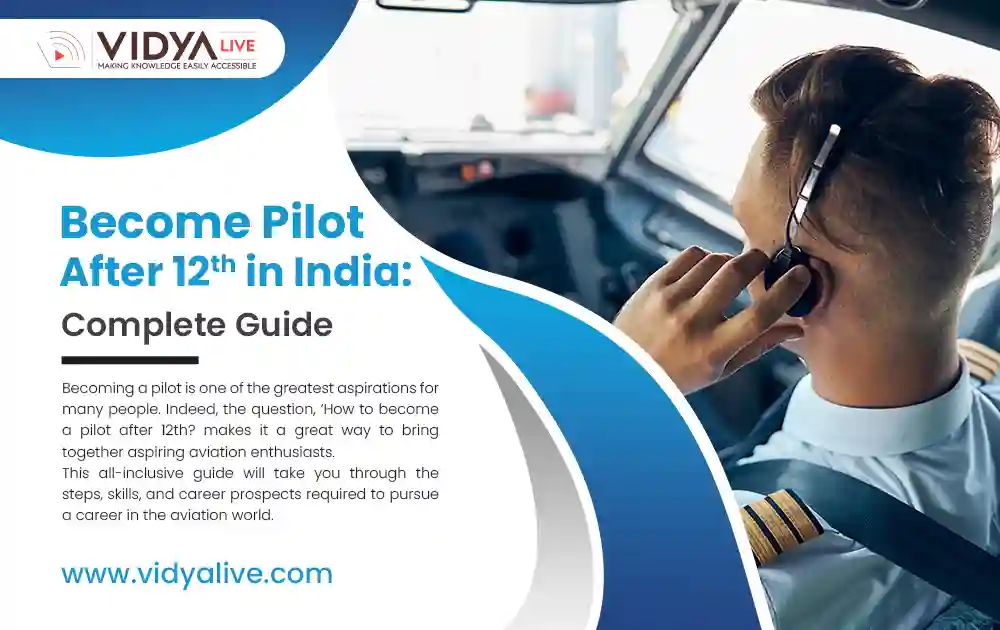
Becoming a pilot is one of the greatest aspirations for many people. Indeed, the question, ‘How to become a pilot after 12th? makes it a great way to bring together aspiring aviation enthusiasts.
This all-inclusive guide will take you through the steps, skills, and career prospects required to pursue a career in the aviation world.
About Pilot Course Highlights
The course is a pilot program to train students in all the basics of operating skills and knowledge that would be required when flying aircraft.
These Aviation Courses in India have combined theoretical knowledge with practical experience in preparing students for the demands of flying.
Pilot Course Outline
Real training includes instruction in ground school through which the students learn various topics, including:
- Navigation
- Meteorology
- Flight Operations
- Aviation Regulations
These theoretical know-how are very important for understanding exactly how to operate the aircraft in a safe and efficient manner.
Besides the training lesson of practical flying, the students will undergo ground training. Ground training classes are held both in real airplanes and simulators.
For this purpose, the students have an opportunity to apply theoretical knowledge to the real situation. Periods of pilot courses vary from 6 months up to 2 years of training depending on the type of license obtained.
Many of the programs train individuals for careers in commercial aviation, for example. Others exist with specializations in:
- Private Flying
- Flight Instructor Training
- Aviation Professional Roles
Read More: Top 10 Aviation Colleges in Mumbai
Why Accreditation Matters in Pilot Training
When you are choosing the pilot course, it is very much crucial that the flying school you choose has accreditation from the Directorate General of Civil Aviation in India.
DGCA -approved ensures your students will acquire quality education and training with equal standards of the industry.
Are You Passionate About Aviation?
It is also important to assess your passion for aviation prior to this profession.
This is indeed an intense, demanding, and challenging profession.
- Dedication
- Determination
- Problem-solving ability
- Interest in aircraft and aviation
If you enjoy aircraft and can make quick decisions under pressure, then aviation may be the right career path for you.
Read More: Top 10 Aviation Colleges in Kolkata
The Joy of Flying
For many, flying is not just a job-it’s a lifestyle.
For the pilot, it means an exclusive feeling of freedom and adventure in soaring through the skies. This passion would sustain you when the going gets tough in training and if the responsibility seems overwhelming in this profession.
Types of Pilots in India
Another fact is that there are different pilots with varied specializations, also referred to as areas of specialization; it’s about getting into what will draw a line between them so you can tell which one suits you best.
Commercial Pilot
They fly aircraft commercially as a mission to fly people in the air, mostly between airlines and cargo transport.
Commercial pilots are trained on huge passenger planes, then usually hired to a certain airline that carries passengers all over the country or around the world. Commercial pilots must undergo a Commercial Pilot License and typically amass large hours of flights to be qualified.
Private Pilot
Private pilots fly for their own purposes and do not earn compensation from others for the privilege.
Examples include flying relatives and friends, recreation flying, or using the aircraft to conduct business without necessarily getting paid. Becoming a private pilot requires getting a Private Pilot License (PPL).
Flight Instructor
Flight instructors are trained pilots that is, flight instructors instruct a novice pilot on how to navigate and operate an aircraft.
In the process, the instructor plays an extremely important role by providing the new pilot valuable insights and guidance. Usually, a flight instructor holds a CPL and may even hold an instructor rating.
Cargo Pilot
Cargo pilots fly cargo rather than passengers.
These pilots work for freight companies, and they should ensure that the cargo reaches the right destination safely and as agreed. The cargo pilot requires very much precision coupled with a keen sense of detail due to challenging conditions at their flying or remote locations.
Read More: Top 10 Aviation Colleges in Kerala
Types of Pilot Licenses in India
To become a pilot, you will need specific licenses. Here are the three major ones:
Private Pilot License (PPL)
A PPL allows flying for non-commercial purposes.
With PPL, you can operate single-engine aircraft and carry passengers, but you may not be paid for the flight.
Commercial Pilot License (CPL)
Commercial Pilot License Commercial pilot license gives a person the license to fly for hire or compensation.
It involves additional training and flight hours and requires specific examinations to pass. A CPL is the major requirement in one’s journey to become a commercial pilot.
Airline Transport Pilot License (ATPL)
ATPL is considered the higher level qualification that an airline pilot has to gain, and this is for airline captains’ use.
The license is allowed only after a pilot has gained certain hours of flight experience and is proved to be completely adept in flying complex aircraft.
Instrument Rating (IR)
An instrument rating enables a pilot to fly under instrument flight rules, IFR, which allows flying even in bad-weather conditions.
Many CPL training programs include an instrument rating because it increases a pilot’s qualification and market value.
Read More: Top 10 Aviation Colleges in Bangolore
Pilot License Requirements
Every license has different requirements, including:
- Minimum flying hours
- Medical examinations
- Written examinations
- Practical flight tests
Understanding these requirements early helps students prepare effectively.
Skills Required to Become a Pilot
To be a good pilot one needs to possess some of these skills that are basic to the safety and efficiency of flight operations.
Communication Skills
Pilots must communicate clearly with:
- Air traffic controllers
- Crew members
- Passengers
More importantly, pilots have to clear things and say them in the best possible way at critical moments of a situation.
Technical Skills
The pilot will need to have sharp knowledge:
- Aircraft systems
- Navigation tools
- Aviation mechanics
Technology must not intimidate they should know how to troubleshoot problems when they arrive.
Problem-Solving Skills
Lives could be saved with fast decisions in crucial emergencies. The proper choice of action must be made extremely quickly through judgment, often under significant pressure from the pilots.
Attention to Detail
Pilots must carefully follow:
- Checklists
- Flight procedures
- Safety measures
This ensures safe flight operations.
Leadership Skills
Most pilots will command a crew, so they need to be able to lead and guide others. They must be able to lead well to manage to produce and sustain an environment that is safe and efficient for the flight.
Read More: Top 10 Aviation Colleges in Coimbatore
How to Become a Pilot After 12th
Step 1: Research and Select a Pilot Course
You may choose one of the pilot course degree programs, such as :
- PPL (Private Pilot License)
- CPL (Commercial Pilot License)
The factors to consider are :
- Course fees
- Duration
- Location
- Flying school reputation
Step 2: Obtain a Class II Medical Certificate
Apply for a Class II Medical Certificate. This is normally done with the Aviation Medical Examiner.
In most countries, this is the initial step in any flying school. Before you begin training, you have to obtain a Class II medical certificate from a medical examiner allowed by DGCA. This will ascertain that you have the kind of fitness required to fly the aircraft.
Step 3: Register at a DGCA-Approved Flying School
Sign up with an approved flying school for the program you’ve chosen.
The cost of a pilot degree in India could be anywhere between INR 5 lakhs to INR 30 lakhs based on the school and course type, so ensure the school is accredited with a good track record in training productive pilots
Step 4: Complete Ground School Training
The ground school is on theoretical knowledge such us:
- Navigation
- Aviation Regulations
- Meteorology
- Flight Theory
This is the stage where the foundation of knowledge would then be used for the conduct of flight training.
Step 5: Complete Flight Training
This may be achieved within a specified flying hours-the number often varies with the license, but for CPL, it is 200 hours. Practice is an integral part of the learning process.
- Aircraft handling
- Navigation practice
- Emergency procedures
- Simulator training
Flight training involves practical hands-on instructions from professional flight instructors and allows you to acquire practical experience in manoeuvre’s and procedures under emergencies as well as in navigating.
Step 6: Obtain Your Pilot License
After completing your training and passing the required exams, you can apply for your pilot license.
The process may involve:
- Documentation
- Completing additional flight hours
- Passing final assessments
Read More: Top 10 Aviation Colleges in Chennai
Eligibility Criteria to Become a Pilot After 12th
Eligibility into a pilot course after 12th may require that one completes the following
Educational Qualification
Completion of 10+2 with:
- Physics
- Mathematics
Some flying schools also allow candidates with a diploma in engineering or other relevant fields.
Age Requirement
Normally, the minimum age for applying for PPL or CPL is 17 years.
Medical Fitness
A Class II medical certificate issued by the medical authorities to ensure the physical fitness of the individual.
Read More: Top 10 Aviation Colleges in india
Physical Requirements To Become A Pilot For Male and Female
In terms of a pilot’s physical requirements, they differ very little between the genders. The candidate needs to adhere to the following:
Vision Requirements
Good vision is required, and the eyesight could be corrected to 6/6.
Furthermore, as pilots have to recognize various signals and instruments through color vision, these are also essential.
Height and Weight Standards
The DGCA sets certain standards in terms of the height and weight. This helps the pilots to conveniently operate aircraft controls.
Medical Conditions
Have no serious medical conditions that may adversely affect their ability to fly.
They undergo a detailed medical check up to determine their overall fitness and health status.
Read More: Exploring a Career After Online BBA Aviation
Career Opportunities After Becoming a Pilot
After obtaining your flight license, there are ample job opportunities. The aviation industry is huge with many jobs awaiting licensed pilots. You can get a job as:
Airline Pilot
Fly for commercial airlines, traveling passengers over domestic and international route systems. Often this job also requires extra training and experience, especially for large aircraft.
Flight Instructor
Teach other pilots the skills needed to safely operate an airplane. It’s a perfect opportunity for those that enjoy teaching others and passing on that passion of flying.
Charter Pilot
This one flies private clients or charters with specific preferences. So, it might be more individualized in flying experience. It often flies from place to place and at times on very short notice.
Agricultural Pilot
An agricultural pilot uses aircraft for crop dusting and other forms of agriculture requirements. The field requires special training in flying techniques and safety handling.
Corporate Pilot
This is a career where corporate executives and employees are flown on private jets, providing a very high level of service and flexibility in travel plans.
After so many years of experience, you may join a higher rank in aviation management or be the chief pilot in operations ensuring that safety standards are maintained.
Read More: How to Join the Indian Air Force as a Pilot After 12th
Conclusion
Choosing to become a pilot is a life-changing decision that requires passion, commitment, and the right education. By pursuing your pilot training at a reputable institution, you can set yourself up for a successful career in aviation.
Whether you’re flying commercial routes or instructing future pilots, the sky is the limit for your aspirations in this exhilarating field.