What is the Paramedical course?
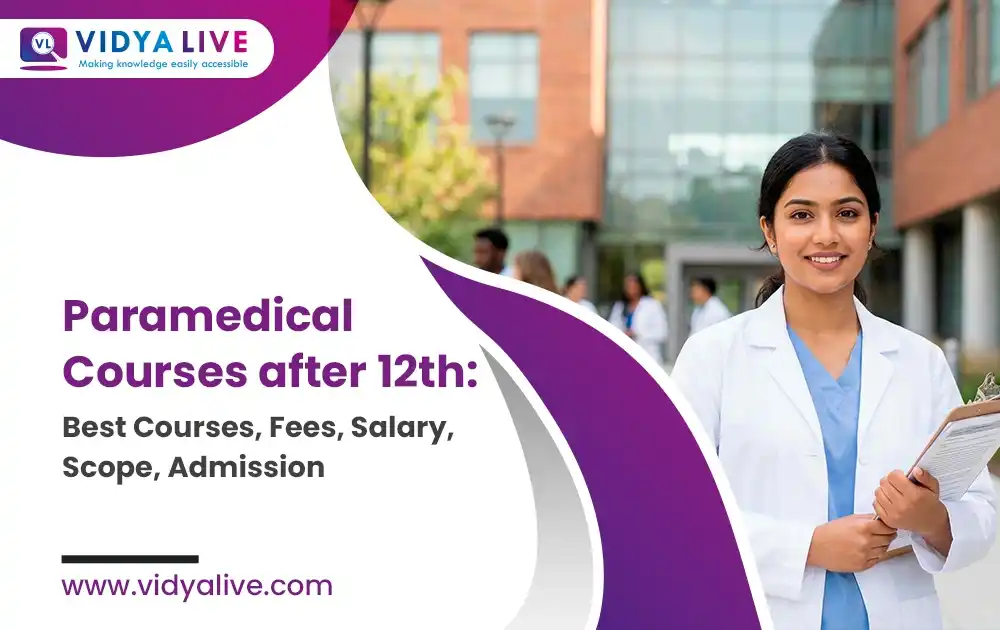
Paramedical Courses are career-focused courses that train students in the health sector domain. These courses equip medical support teams, diagnostic teams and the workforce essential for patient care. Paramedical Courses after 12th have become strong alternatives for candidates aiming to enter to healthcare without pursuing a traditional MBBS degree. With the healthcare sector expanding rapidly in India and globally, paramedical professionals have become vital to modern medical services.
What are Paramedical Courses after 12th?
Paramedical Courses are aimed at offering education to candidates for several fields that are related to the medical field and associated health care amenities. The paramedical field covers several disciplines that work alongside doctors and nurses to deliver inclusive patient care. In the healthcare sector, professionals contribute by performing diagnostic tests, handling medical devices, offering therapeutic amenities, and assist while medical processes.
Medical diploma courses and paramedical courses details differ principally in the form of scope and focus. Medical courses after 12th like MBBS focus on diagnosing diseases and prescribing treatments, whereas paramedical courses emphasize on advancing specialized technical skills to support in the healthcare sector. Paramedical professionals get the opportunity to work in clinical laboratories, radiology units, operation theatres, physiotherapy centres, and emergency care services.
Who can do Paramedical Courses?
Paramedical courses are well-suited for candidates from the Physics, Chemistry, and Biology (PCB) stream. However, several paramedical programs also admit students from non-biology backgrounds. Students from Commerce and Arts background can also be eligible for certain paramedical courses, though their range of options may be fairly narrow in comparison to science students.
Generally, most institutions’ minimum requirement usually ranges from 45% to 50% in 12th grade, though requirements may differ across institutions and courses. Some well-regarded colleges may set higher percentage criteria for admission. When it comes to age criteria, most courses fix the minimum age of 17 years old at the admission time, with varying upper age limits relying on the establishment.
Read more: Top 10 Job Profiles After Completing Health Management Courses
Best Paramedical Courses after 12th
BSc in Medical Laboratory Technology (MLT) is a special course that guides candidates with expertise in diagnostic tests, blood sample examination, and laboratory equipment operation. The course usually lasts for three years.
BSc Radiology and Imaging Technology enables candidates to manage superior imaging apparatus like X-rays, CT scans, and MRI machines. This sphere has acknowledged a substantial development with the technology modernization in medical imaging.
Diploma in Operation Theatre Technology prepares students for operation theatre management, sterilizing practices, and supporting surgeons. This rigorous course usually runs for two years.
BSc Nursing continues to be an esteemed paramedical course, providing exceptional career opportunities both in India and overseas. Nursing experts are indulged in offering direct patient care and function in coordination alongside doctors.
Diploma in Physiotherapy focuses on rehabilitative care, permitting students to assist in patient recovery and manage chronic conditions through efficient physiotherapy techniques.
BSc Dialysis Technology furnishes candidates to run dialysis machine equipment and care for patients with kidney-related disorders, addressing the mounting demand for practiced professionals.
Read more: High Paying Advance Certifications in Health Management in India
Which Paramedical Course has the Highest Salary?
Salary scale in paramedical fields is prejudiced by factors such as specialization, experience, and type of employment. Typically, B.Sc Radiology and Imaging Technology offers competitive entry-level salaries, with fresher earning between ₹3.5 to 5 lakhs per year. Radiographers with experience working in metropolitan areas or private hospitals can earn salaries exceeding ₹8 to 12 lakhs annually.
BSc Medical Laboratory Technology and BSc Nursing also guarantee promising and competitive salary prospects. Professionals at the entry-level normally earn ₹2.5 to 4 lakhs per year, whereas those with five to ten years of experience can earn ₹6 to 10 lakhs. While government jobs normally offer lower starting salaries but ensure better job security, pension benefits, and balanced work-life, as opposed to private sector positions.
Read more: Career After Health Management Certifications
Paramedical Courses List after 12th (Science, Arts & Commerce)
The candidates having PCB in 10+2 have access to a variety of paramedical courses, comprising all degree and diploma programs in laboratory technology, radiology, nursing, physiotherapy, and dialysis technology.
Students not having PCB can chase courses such as Diploma in Medical Record Technology, Certificate in Emergency Medical Technology, Diploma in Healthcare Management, and several short-term certification programs in medical transcription, medical coding, and hospital administration.
Short-term certification courses ranging from six months to one year include programs in ECG Technology, X-ray Technology, First Aid and Emergency Care, and Ophthalmic Technology.
Can I do Paramedical Courses without NEET?
Most paramedical courses without NEET can be pursued. Students can gain admission through direct merit-based selection or institute-specific entrance examinations. This situation makes paramedical education reachable to a wider category of students who may not have cleared NEET or prefer not to pursue MBBS. Though, some premier government institutions conduct their own entrance tests. Some of these entrance exams contain the AIIMS Nursing Exam, the JIPMER Nursing Entrance Exam and several state-level paramedical entrance tests. Several private colleges arrange direct admission based on 12th -grade marks.
Read More: Why The Demand Of Pharmacy Courses Rising
Top Paramedical Colleges in India (Government & Private)
Top paramedical colleges in India include both government and private colleges. Government institutions such as AIIMS campuses across India, JIPMER and state-run medical colleges offer excellent paramedical courses at reasonable fees.
Private institutions like Manipal University, Christian Medical College (CMC) Vellore, Kasturba Medical College, and Apollo Institute offer superior education accompanied by contemporary infrastructure. While selecting a college, factors to be deliberated are accreditation, faculty expertise, infrastructure, clinical coverage, placement records, and fee structure.
Read more: Top 10 Colleges for Advance Certifications in Health Management
What are the Fees of Paramedical Courses in India?
Fees for Government College remain extremely affordable, usually ranging from ₹10,000 to ₹50,000 for the whole course. These government institutions offer outstanding education at subsidized prices. When it comes to private college fees vary noticeably, from ₹1 lakh to ₹5 lakhs for the entire program, depending on the institution's status, location, and amenities. Various scholarship choices subsist for commendable candidates, comprising state government scholarships, central government schemes, and institution-specific financial support programs.
Read more: Rehabilitating Lives: Bachelor of Physiotherapy Demystified
What is the Duration of Paramedical Courses?
The duration of Certificate courses usually last 6 month-1 year, concentrating on precise expertise such as ECG technology or dental support. While diploma courses usually run for 1-2 years, offering complete training in particular areas such as operation theatre technology or medical laboratory technology. Degree programs, including bachelor courses, expand more than 3-4 years, offering thorough theoretical knowledge with practical training.
What are the Career Options after Paramedical Courses?
Paramedical graduates have a number of career opportunities. The graduates can work as Lab Technicians, Radiographers, Physiotherapists, Dialysis Technicians, Operation Theatre Assistants, Dental Hygienists, and Emergency Medical Technicians.
The graduates can entitled to get employment in multi-specialty hospitals, diagnostic units, pathology laboratories, rehabilitation centers, research establishments, pharmaceutical organizations, and medical equipment manufacturing firms.
Government jobs can be pursued, and candidates can work across health departments, railways, defense medical amenities, and public sector hospitals, providing firmness and benefits, whereas private healthcare amenities regularly offer higher initial salaries with hasten career augmentation.
Read more: How to Apply for a PhD Stipend
What is the Salary after Paramedical Courses?
The salary ranges between ₹2.5 and 4 lakhs annually for fresh graduates. Within a few years of experience, professionals can anticipate ₹5 to 8 lakhs, and senior professionals with specific skills earn ₹10 lakhs or more. Broadly higher compensation can be earned from foreign opportunities, mostly in Arab nations, the UK, Australia, and the US. Paramedical experts of India are in demand globally, with salaries ranging from $30,000 to $60,000 yearly, depending on the country and specialization.
Is Paramedical a Good Career Option in the Age of AI?
While AI is reshaping the healthcare industry, paramedical roles remain relatively secure. AI can surpass in data analysis and identify patterns, but it cannot replicate the human touch, critical thinking, and patient engagement offered by medical experts.
Roles that demand physical presence, emotional intelligence, and practical skills, such as physiotherapy, nursing care, operation theatre support, and patient handling, are tough to mechanize. The outlook for the future remains strong as healthcare needs continue to grow with India's rising and ageing people.
Read more: Bachelor of Medicine and Bachelor of Surgery (MBBS) Essentials
Paramedical vs Nursing – Which is Better?
Paramedical and Nursing are both rewarding careers with different distinctiveness. Nursing offers wider career prospects, global mobility, and usually higher remuneration, especially overseas. Nursing roles comprise direct patient care, obliging robust interpersonal skills and emotional endurance.
There are more specialization options in Paramedical courses, empowering students to focus on particular technical areas corresponding to their interests. Some paramedical domains, such as radiology may engross less direct patient interaction, which some candidates favor.
Difficulty levels differ by individual ability. Nursing requires 24/7 shift responsibilities and strong emotional resilience, whereas technical paramedical disciplines need high levels of accuracy and careful attention to detail.
How to Choose the Best Paramedical Course for you?
Candidates strive to maintain a balance between personal interests, with market demand, and salary opportunities. Candidates interested in laboratory work and accuracy may find MLT suitable. Candidates drawn to technology and imaging can discover radiology courses, whereas candidates who like patient-interaction can prefer nursing or physiotherapy.
Perform an honest evaluation of the skills required. Domains like radiology require technical ability, laboratory technology needs attention to detail, physiotherapy entails physical stamina, and nursing requires emotional resilience.
The choice can be aligned with long-term career aims. The candidates must deliberate whether they want to work clinically, in diagnostics, in research, or initiate own practice or diagnostic centre ultimately.
Read more: Bachelor of Ayurvedic Medicine and Surgery
Paramedical Courses Admission Process 2026
The most common mode of admission is merit-based, where selection is resolute by 12th-grade scores. Application processes normally commence between April and June. When required, entrance exams are conducted between May and July. Successful research includes studying basic science insights, general cognizance, and aptitude.
Documents required to be submitted by students are 10th and 10+2th mark sheets, transfer certificate, migration certificate, caste certificate (if applicable), passport-size photographs, Aadhar card, and domicile certificate in the case of state quota admissions.
Conclusion
The opportunities to work in healthcare can be pursued by candidates through Paramedical courses. Meaningful skills can be practiced accompanied by reasonable course fees, convenient duration, rising demand and decent salaries. Paramedical courses are feasible alternatives to medical courses. Regardless of whether candidates select radiology, laboratory technology, nursing or physiotherapy, the paramedical domain assures a secure, pleasing career dedicated to the health and well-being of society.